Is this health product legit? Search the FDA Health Fraud Product Database for the product name and brand, then match any recall notice against your product’s lot number. A clean search is not proof of safety.
Your first decision is timing. Before buying, screen the product and its claims. If it is already at home, match its identifiers to recall notices. If something feels wrong after use, the order of steps changes, and the routes below show how.
Choosing your starting point
The cheapest useful check depends on where the product is right now, so pick the path that matches your situation.
- Still on the shelf or in the online basket. Screen it before paying. Search the FDA database, read the label closely and treat any “FDA approved” claim on a supplement with suspicion. Walking away at this stage costs nothing.
- Already in your home. Compare the product name, manufacturer and lot number with recall notices. AARP’s guidance on drug and supplement recalls says that finding out whether a recall applies to you takes only a few minutes, so there is little reason to put it off.
- A reaction or an unexpected effect. Contact a health professional or your regional poison control service. Keep the packaging so the product name, manufacturer and lot number are to hand when you call.
A few questions decide how deep to go. Does the product promise an effect that sounds like a medicine? Do you take prescription medicines or other supplements? Is the seller hard to identify? A yes to any of these means running the full sequence in this guide rather than stopping at the label. A product that makes only modest claims, from a seller with a clear name and address, usually needs less scrutiny than a miracle-style promise from an anonymous storefront.
What “FDA approved” means for a health product
For dietary supplements, “FDA approved” is not a claim you should expect to see, and it should prompt a closer look rather than reassurance. A 2004 review in PubMed Central stated that the US government does not review dietary supplement products before they are marketed. The same review said manufacturers are responsible for making sure their products are safe and their label claims are accurate. That description dates from 2004, so confirm the current position on the FDA’s own consumer pages if a purchase turns on it.
That arrangement answers the question of whether a product is FDA approved in practical terms. A supplement can be on sale without anyone in government having checked it first. Responsibility sits with the company, and the checks in this guide exist because that company’s word is often the only assurance on the label.
The FDA’s own database uses the same vocabulary from the other side. It lists unapproved products that have been subject to health fraud related violations. When a product page says approved, cleared or certified, ask who did the approving. A government body, a private testing company and the seller’s own marketing are three very different sources of assurance. The section on independent testers below explains why a private seal is not a government approval.
Searching the FDA Health Fraud Product Database
The FDA Health Fraud Product Database is the best first stop for a screen because it is a regulator’s own list and it is searchable by anyone. It gathers unapproved products tied to FDA health fraud enforcement. Entries cite warning letters, online advisory letters, recalls, public notifications and press announcements, and the list carries entries dated through 2026, including 09/25/2026.
Search steps
- Open the FDA Health Fraud Product Database page and find the search box above the results table.
- Type the product name. The table results update automatically as you type, so you do not need to submit a form.
- Shorten the name if nothing appears, then try the brand or the company that sells it. A full product title with flavour or size words can miss a row that a shorter name would catch.
- Read each matching row across. The columns are Date, Product, Firm, Firm Address, Source/URL(s), Subject, Action, Program Area(s) and Additional Outcome.
- Open the link in the Source/URL(s) column to read the underlying notice rather than relying on the table line alone.
- Compare the Firm and Product columns with what is printed on your package before deciding the entry is yours.
Reading a result
The Subject column tells you what the problem is, and the Action column tells you what the FDA did about it. Some examples from the 2026 entries show the range. A 09/17/2026 entry for Niwali Tejocote Capsules from Global Mix, Inc. lists undeclared yellow oleander, with the action “Alert and Recall”. An entry dated 07/01/2026 for MAGNUM XXL 300K Honey lists undeclared sildenafil and tadalafil under a public notification. Further alerts from June 2026 cover skin creams with mercury and/or hydroquinone, sold in several countries and online.
Treat the Subject column as the most useful read. A row about an undeclared ingredient means the label could not be trusted to tell you what you were taking, so a matching product should be set aside, whatever the claims on the packaging say.
What a clean search does not mean
The FDA states that the list includes only a small fraction of the potentially hazardous products marketed to consumers online and in retail establishments. It also says that even if a product is not on the list, consumers should exercise caution before using certain products. Use the database to find known problems, never to clear a product. If a search comes back empty, move on to the label and claim checks, which are where most of the remaining protection comes from.
Matching a product to a recall notice
Checking whether a product is recalled comes down to matching identifiers, not recognising a brand name. AARP advises checking the product name, manufacturer and lot number against the recall notice to find out whether a recall affects your medication or supplement. Its page was updated on August 14, 2026.
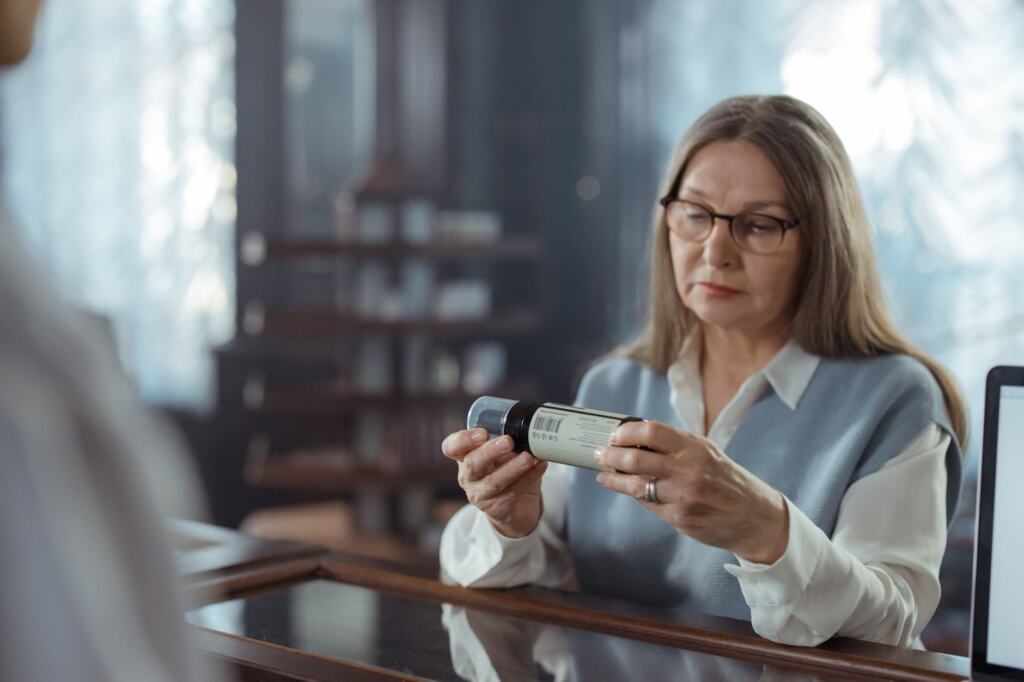
In practice, the sequence is short:
- Collect the identifiers first. Read the product name, the manufacturer and the lot number from the package. If a label does not name a manufacturer, you cannot complete the match, which is itself a reason to hesitate before buying a similar product.
- Search by name, then by company. Use the FDA database steps above. Because the Firm column is searchable along with the product, a company search can surface a notice that a differently worded product title would hide.
- Open the notice and compare all three identifiers. A matching brand alone is not enough. The notice should match your product name and manufacturer, and the lot details it lists should match what is on your package.
- Read the Action column. The Niwali Tejocote Capsules entry shows the pattern: a named firm, a stated problem (undeclared yellow oleander) and an action of Alert and Recall. Other entries are warning letters or public notifications, which are different from a recall, so read what the notice asks you to do.
Keep any package or photograph of the label until you have finished checking. Once a bottle is discarded, the lot number goes with it.
Reading the label and the claims
A label read will not reveal an undeclared ingredient, but it does tell you whether the product is promising the sort of effect that justifies a harder look. Compare what the product claims with what it lists. A product sold as a natural supplement but promising a drug-like effect is the pattern the FDA entries describe, with undeclared sildenafil and tadalafil appearing in several 2026 entries. That does not mean every strongly marketed product is tainted, but it does mean a database search and a seller check are worth the few minutes.
When you read, look for these things:
- A named manufacturer and address. Recall matching depends on the manufacturer’s name, and the FDA table is organised by firm and firm address.
- A lot number you can read. If it is missing or unreadable, you cannot confirm a match against a notice.
- Claims that outrun the ingredient list. If the effect described would normally need a medicine, the gap between claim and ingredients is where undeclared drugs hide.
- Approval language. Treat “FDA approved” on a supplement as a prompt to ask who did the approving, as the earlier section explains.
Tainted products and health scams
A tainted product is one that contains an ingredient the label does not declare, and the FDA database shows this is the pattern to watch for. The 2026 entries include undeclared yellow oleander in a capsule product, undeclared sildenafil and tadalafil in supplement products, and mercury and/or hydroquinone in skin creams. The skin creams are a reminder that the risk is not limited to things swallowed. The database entries also carry the Program Area for each product, with categories such as Foods, Drugs and Cosmetics appearing across the entries.
This answers how to spot a health scam as far as the evidence reaches. No single feature of a product page proves fraud, but several things raise the odds that a closer check is needed:
- The product behaves like a drug but is sold as a food or supplement. The undeclared-drug entries show how a bottle can carry an active ingredient the label never mentions.
- The seller cannot be traced. If you cannot find a firm name and address, you cannot search the Firm column or match a manufacturer to a notice.
- The product appears in the database. Any row that matches both name and firm should end the purchase, and for something already owned it should end the use.
- A review that cannot say who pays for it. The next section explains why funding matters when you judge a review.
Because the database lists only a small fraction of risky products, a scam can be real even when no row appears. For that reason the safest habit is to weigh several weak signals together rather than waiting for one decisive proof.
Independent testers and review sites
A private testing seal can tell you something useful about a product, but it is not a government approval. The PubMed Central review describes ConsumerLab.com as a privately held company. The criteria it uses to test products include identity, potency, purity, bioavailability and consistency, and manufacturers can license its CL Approved Quality Product Seal. A seal like this is a quality signal from a company, which is a different thing from the regulator’s review.
Funding explains how much weight to give a review. The same review noted that vendors pay an advertising fee to be listed in that site’s Where to Buy Products section, so a buying list is not the same as a test result. The site also carries a Recalls and Warnings section that gathers alerts from government agencies such as the FDA. That makes it a convenience, but the original agency notice remains the better source to read.
Consumer Reports, by contrast, states on its health pages that it takes no advertising, sponsorships or free samples for testing. That is a statement about funding, and it is a useful question to ask of any reviewer: who pays, and does the reviewer accept free product or ad fees? Use independent reviews to supplement the FDA database and the recall check, not to replace them.
Online marketplaces and combining products
Two situations call for extra care because the usual cues are weaker. The first is a third-party seller on a large marketplace, where the manufacturer, lot number and seller identity may be harder to confirm before the parcel arrives. If that is your situation, the is it safe to buy supplements on amazon checklist applies the same ideas to a marketplace listing. Before you order, make sure you can identify the manufacturer, and photograph the label when the product arrives.
The second is taking a new product alongside prescription medicines or other supplements. A legitimate product can still be a poor fit for your regimen, and a tainted one adds an ingredient you did not choose. A supplement drug interaction checker walks through how to check combinations before you start. A pharmacist can also review your full list of medicines and supplements, which is the safest route if you take several.
Safety checks by product category
The FDA database and recall checks tell you whether a product has been flagged. They do not answer questions about what is in a product or whether an ingredient is a concern. For those, the category guides below go further, and the legitimacy checks above still apply to whatever you decide to buy.
- Food additives and contaminants. For colouring questions, Is Red Dye 40 Bad For You? What Science Says About Safety, Risks, And Safer Choices (2026 Guide) – Testpledge weighs the evidence. If a spice is the worry, see Is There Lead In Cinnamon? What Consumers Need To Know In 2026 – Testpledge. Two further additive and residue questions are covered in Glyphosate In Food: What You Need To Know About Exposure, Risks, And Safety (2026 Update) – Testpledge and Is Titanium Dioxide In Your Food Safe? What Shoppers Need To Know In 2026 – Testpledge.
- Cookware and kitchen appliances. If you are replacing nonstick items, start with PFAS-, PFOA-, And PTFE-Free Cookware: The Practical Guide To Safer Nonstick Cooking In 2026 – Testpledge. For appliances, there are guides to Best PFAS-Free Air Fryers In 2026: Choose Safer Nonstick Cooking Without The Chemicals – Testpledge and PFAS-Free Rice Cookers: How To Choose Safe, Non-Toxic Models In 2026 – Testpledge. For baking, see PFAS-Free Parchment Paper: How To Choose Safe, Nonstick Baking Paper In 2026 – Testpledge.
- Plastics and drinking containers. Marketing terms are a good place to apply the approval-language habit, and BPA Free Meaning: What “BPA‑Free” Really Means For Your Health In 2026 – Testpledge explains one of the most common. Bottles are covered in Microplastics In Water Bottles: What Consumers Need To Know In 2026 – Testpledge, and heating food in plastic is covered in is microwave safe plastic really safe.
- Personal care and household products. Hair care is covered in Phthalate‑Free Shampoo: How To Choose Safer, Healthier Hair Care In 2026 – Testpledge, scents in Phthalate-Free Fragrance Oils: How To Choose Safer Scents In 2026 – Testpledge, and laundry in Phthalate‑Free Laundry Detergent: How To Choose Safe, Effective Options In 2026 – Testpledge. For items that touch the body daily, see PFAS-Free Dental Floss: The Safe, Sustainable Choices You Can Trust In 2026 – Testpledge, PFAS-Free Toilet Paper: How To Choose Safe, Sustainable Rolls In 2026 – Testpledge and PFAS-Free Clothing: How To Choose Safer, Sustainable Fabrics In 2026 – Testpledge.
- Warning labels. When a product carries a state warning you do not understand, Prop 65 Warning Labels: What Consumers And Businesses Need To Know In 2026 – Testpledge explains what the label is and who it applies to.
Putting the checks together
No single check covers every worry, so the checks work best in combination. The table shows which check suits which moment and where each one stops being useful.
| Check | Best moment | What it cannot tell you |
|---|---|---|
| FDA Health Fraud Product Database search | Before buying, or when a product’s claims seem too strong | It covers only a small fraction of potentially hazardous products, so no match is not clearance |
| Matching product name, manufacturer and lot number to a recall notice | After buying, or when a notice appears in the news | It cannot work if the label omits the manufacturer or lot number |
| Reading the label and claims | Before buying, and again when the product arrives | It cannot reveal undeclared ingredients, which the FDA entries show can appear in products sold as supplements |
The table’s points come from the FDA Health Fraud Product Database page and from AARP’s recall guidance.
Packaging checks and after-purchase habits
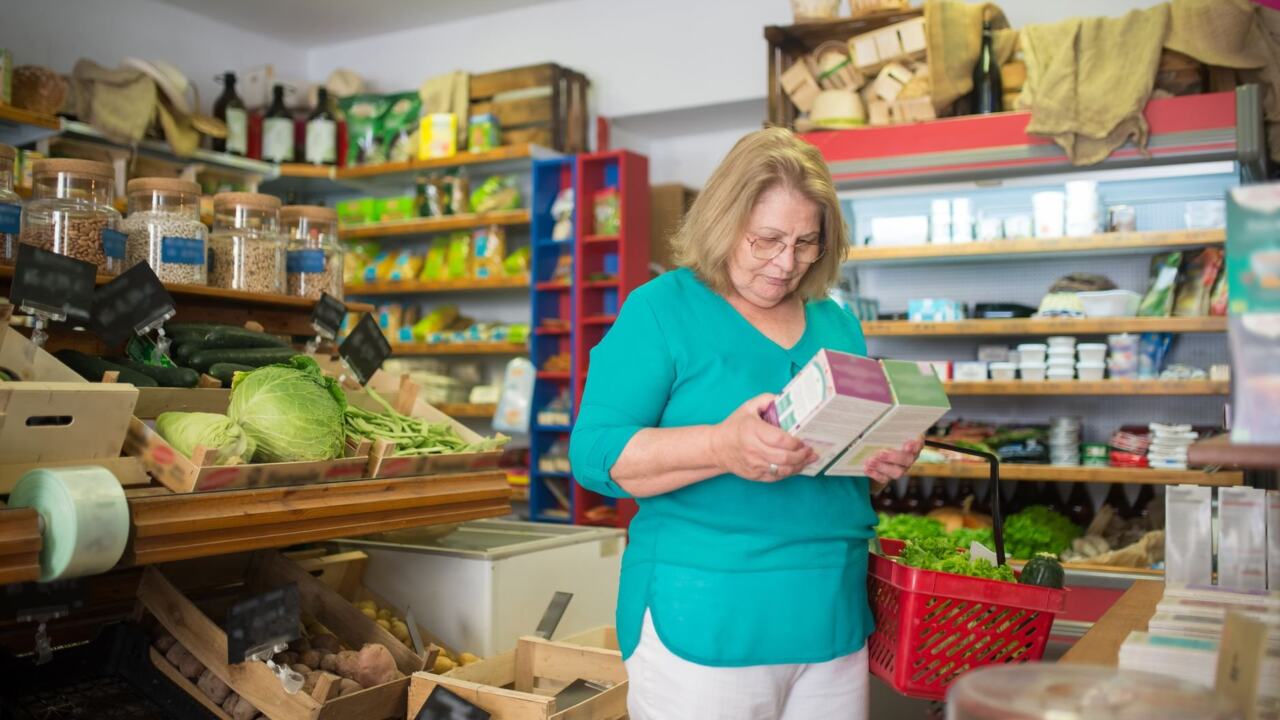
Packaging is the part of a product you can inspect with no database at all. Look at the container as well as the label: damaged, loose or opened packaging is a reason to choose another unit or ask the retailer about it. Illustrative images of shoppers handling sealed packages are not evidence about any particular product, and the standard here is simply what you can see for yourself.
After you buy, a few habits keep the checks useful:
- Record the identifiers. Photograph the label and note the product name, manufacturer and lot number, so a later notice can be matched without the package.
- Search again later. The FDA database carries dated entries running through 2026, so a product that was absent when you bought it could appear afterwards.
- Keep concerns specific. If you contact a seller, the retailer or the manufacturer, name the product and lot number rather than describing it in general terms.
- Stop at the first mismatch. A firm that matches a database row, a label that differs from the photographs you saw when ordering, or a lot number that does not exist is enough to pause use and ask a pharmacist or health professional.
Frequently asked questions
How long does a recall check take?
AARP says that finding out whether a recall applies to you takes only a few minutes once you have the product name, manufacturer and lot number in front of you.
Does a recall apply to every bottle or package of a product?
Usually not. AARP notes that a recall usually applies only to specific manufacturers, products or lot numbers, which is why the lot number matters. A different lot of the same brand may be unaffected, but you can only confirm that by reading the notice.
Should I stop a prescription medicine named in a recall notice?
Talk to a pharmacist or health care provider first. AARP warns that stopping a prescription on your own can carry more risk than the recall itself, so get advice on whether to continue or switch.
Can a company’s quality seal stand in for regulator review?
No. A private seal such as the one described in the 2004 PubMed Central review is licensed by a privately held company to manufacturers. It signals that a product met that company’s test criteria, not that a government body reviewed it.