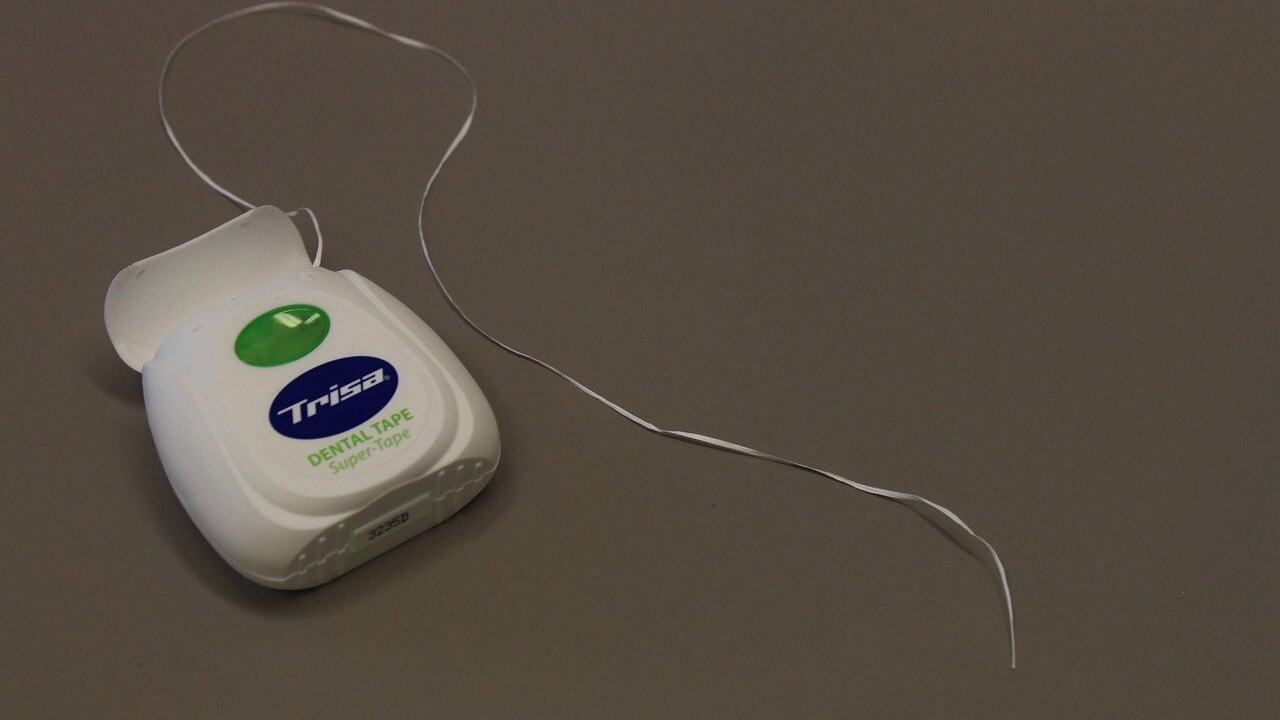
Picking up a glossy spool that says “coated for comfort”, you cannot tell if it is pfas free dental floss. Some floss does contain PFAS, mainly glide or satin types, so check coatings and testing.
The same habit works for any wellness product, and the checks in our guide on is this health product legit show how to apply it. Below, each common assumption about floss is set against what the evidence supports.
Where PFAS turns up in floss
Dental floss can contain PFAS, but not every floss does. According to a periodontist’s overview, these chemicals are primarily used in the “glide” or “satin” varieties, where they make the thread slippery. A dental practice’s guide describes PFAS as Teflon-like substances often used to make floss glide more easily.
PTFE is the ingredient to know. It is a type of PFAS, and Procter & Gamble, maker of Oral-B Glide, confirmed to Consumer Reports that its floss contains PTFE, citing performance. That makes “does dental floss contain PFAS?” a question about the specific product, not floss as a category.
| Floss type | Coating or material | PFAS concern | Planning use |
|---|---|---|---|
| Glide or satin floss | Slip coating; PTFE confirmed in Oral-B Glide | Highest of the types here | Skip unless the brand names a non-fluorinated coating and shares testing |
| Unwaxed nylon | Typically nylon, can feel grippy | No PFAS glide coating is described for it; confirm on the label | Suits people who accept a grippier feel |
| Natural-waxed floss | Beeswax, carnauba or other plant-based wax instead of synthetic coatings | Recommended as the alternative to synthetic coatings | A sensible default; read the full ingredient list |
| Silk floss | Biodegradable natural fibre | Described as a natural alternative that works well | Suits shoppers who also want a biodegradable material |
Figures and descriptions come from the periodontist’s overview and the Consumer Reports guidance.
What independent testing has found
Independent scrutiny of floss is limited, so it helps to be exact about what exists. Consumer Reports, working with Made Safe, flagged ten floss products as either failing to disclose their ingredients, containing PFAS, or including other components linked to health concerns, as reported in a broadcast summary. That result concerns disclosure as much as chemistry.
Four brands, Tom’s of Maine, Dental Lace, Cocofloss and Nudge, told Consumer Reports they do not intentionally add PFAS. The Humble Co. confirmed PFAS-free status but gave incomplete flavour details. These are company statements to a reviewer, which is useful but different from a published lab result for each product.
What the blood-level research adds
Some studies have found higher levels of certain PFAS in the blood of people who use specific coated floss brands, according to the same periodontist’s overview. One study, reported in January 2019 and covered by the Atlanta Journal-Constitution, examined blood samples from 178 California-based middle-aged women and measured 11 PFAS. It was published in the Journal of Exposure Science and Environmental Epidemiology.
Treat this as a reason to prefer non-fluorinated floss, not as a measure of harm from any one spool. The same overview notes that research on how much PFAS is absorbed through flossing is still evolving, and that the American Dental Association maintains floss remains a safe and essential part of oral hygiene.
Label claims versus lab verification
A “PFAS-free” line on packaging and a lab-tested result are different kinds of evidence. Floss makers are not required to disclose all ingredients, so the label may leave out the very component you are asking about. These are the assumptions most likely to mislead a shopper.
- “PFAS-free on the box means it was tested.” Not necessarily. A claim can reflect a formulation decision, like the “we do not intentionally add PFAS” statements brands gave Consumer Reports. A lab report is the only thing that shows PFAS were measured and not found.
- “A full ingredient list settles it.” Only partly. Disclosure is not mandatory for all floss ingredients, so a short list can still hide a coating. Look for named materials, not just a short list.
- “Vague comfort language is harmless.” Phrases such as “coated for comfort” with no specifics are flagged as red flags by the dental practice guide. A coating that is not named cannot be checked.
- “No PFAS word means no PFAS.” PTFE or “Teflon” on a label indicates PFAS, even when the word PFAS never appears.
Evidence of a stronger kind is the manufacturer’s own transparency. The same dental guide advises looking up the manufacturer’s transparency and third-party testing reports. Third-party lab testing is the step that moves a claim from marketing to evidence, so a brand that posts it deserves more trust than one that only prints a badge.
A verification-first buying checklist
Work through these checks in order. Stop at the first one a product fails.
- Read the coating name. Look for beeswax, carnauba or plant-based wax. Move on from any product that lists PTFE or Teflon, or that gives only a vague comfort claim.
- Check the fibre. Nylon, silk or cotton should be stated. An unnamed material is a reason to keep looking.
- Find the testing. Search the brand’s site for third-party lab reports. A report you can open beats a badge you cannot trace.
- Match the claim to the evidence. A statement of no intentional addition is weaker than a published result, so rank products accordingly.
- Ask when information is partial. If a brand confirms PFAS-free status but leaves out other details, as The Humble Co. did on flavours, request the missing information before relying on the claim.
If two products are otherwise equal, choose the one that names its wax and publishes a report. If neither does, a plain unwaxed or natural-waxed floss is a simpler bet than a coated one with an opaque label.
Safer floss materials and alternatives
Consumer Reports recommends flosses coated with natural substances like beeswax or plant-based waxes, and floss made from biodegradable materials like silk or cotton. The periodontist’s overview similarly suggests beeswax or carnauba wax in place of synthetic coatings and describes silk as a biodegradable, natural alternative that works perfectly well.
Choosing between waxed, unwaxed and silk
Natural-waxed floss suits most people who want the glide that PTFE-coated products provide without the PFAS. Unwaxed floss is typically nylon and can feel a bit grippy, so it suits people who do not mind that texture. Silk suits shoppers who care about biodegradability. None of these sources ranks them on strength or shredding, so test a small spool before buying in bulk.
Where a water flosser fits
A water flosser avoids thread altogether. Consumer Reports notes it may not be quite as effective as string floss at scraping away bacteria, though it can help with food debris. It works as a supplement or a fallback for someone who cannot find a verified thread, not as a full replacement.
Related safety checks
The label-versus-evidence gap shows up well beyond floss. For ingredient claims in food, read Is Titanium Dioxide In Your Food Safe? What Shoppers Need To Know In 2026 – Testpledge. For household products, see Phthalate‑Free Laundry Detergent: How To Choose Safe, Effective Options In 2026 – Testpledge.
Frequently asked questions
| Question | Answer |
|---|---|
| Is flossing still worth it if some floss has PFAS? | Yes. The American Dental Association maintains that floss remains a safe and essential part of oral hygiene, so the practical move is to switch to a non-fluorinated product, not to stop flossing. |
| Is PTFE the same as PFAS? | PTFE is a type of PFAS. Seeing it, or the name Teflon, on a floss label signals that PFAS are present. |
| Does a seller’s “PFAS Free” listing prove anything? | It is a label-style claim, as with the “PFAS Free” text on some waxed floss listings. Ask the brand for a third-party lab report before treating it as verified. |
| Can a water flosser replace string floss? | Not fully. It may be less effective at scraping away bacteria, but it can help clear food debris. |