Shopping for a pfas free air fryer? Most air fryers use nonstick-coated aluminum baskets, so the label matters. Choose bare stainless steel, glass or a genuinely PFAS-free ceramic coating, and confirm the claim covers every food-contact part.
Picture a product page that says “PFAS free” while the manual describes a PFAS non-stick coating on the trays. That mismatch is recorded for an Instant air fryer in a UK record of PFAS and PTFE hazards. It is why a claim needs checking before you trust it.
The same habit works for any product with a vague safety promise, and the broader routine is set out in our guide on is this health product legit.
Where PFAS turn up in air fryers
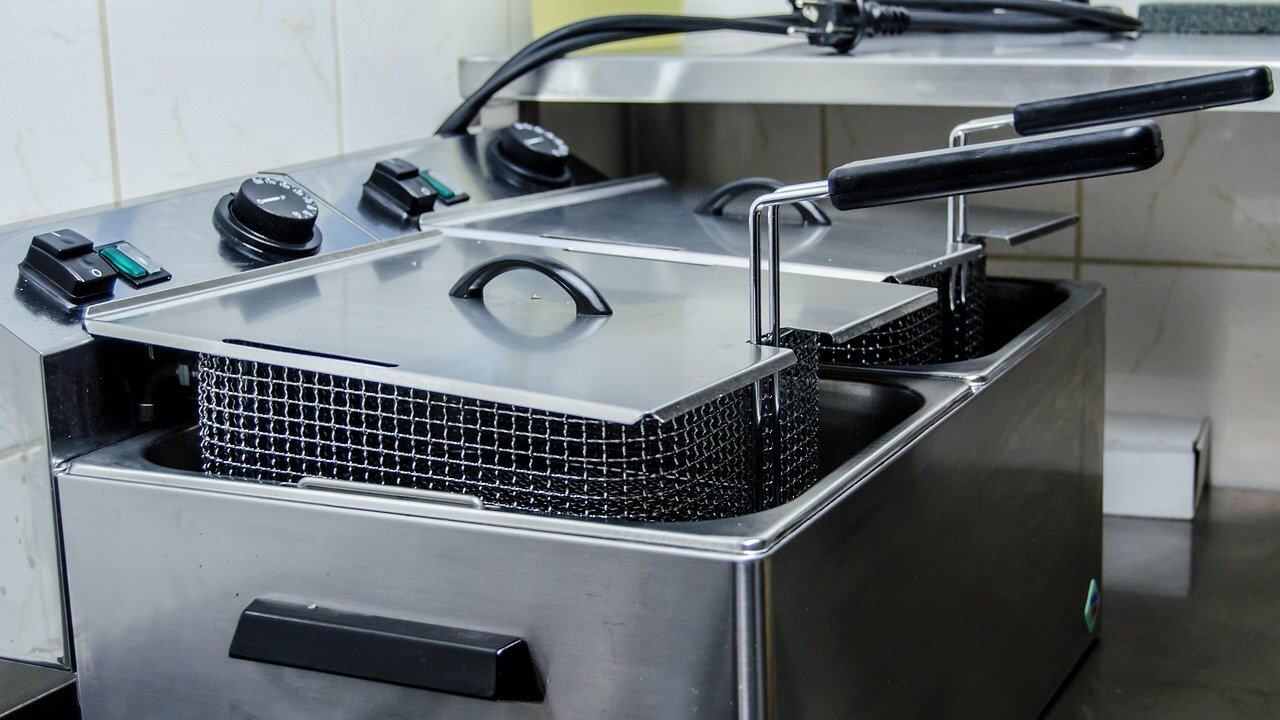
Air fryers can contain PFAS because the typical basket is coated. CNET’s air fryer testing notes that most air fryers use aluminum cooking baskets with a nonstick coating, and that those coatings tend to chip and break down if you are not careful.
The coating chemistry is the issue. PTFE belongs to a larger family called PFAS, so a PTFE-coated basket is a PFAS-containing part. PTFE is also the usual nonstick choice in cookware. An Ecology Center survey from 2020, summarised in a cookware PFAS claims tracker, found 79 percent of 14 nonstick pans were PTFE-coated.
Not every model follows that pattern. In the UK record mentioned above, most air fryer entries were free from PTFE and other PFAS, but the record also listed a model that contained them and another that was not found. PFAS-free air fryers are realistic to find, but the category is not uniform, so each model needs its own check.
Label wording versus what it proves
The most common mistake is reading one reassuring word as a clean bill of health. Each label term rules out a different chemical or class, so the table below sets out what each phrase does and does not tell you.
| Label wording | What it addresses | What it leaves open | Planning use |
|---|---|---|---|
| PFOA-free | One specific chemical | A pan sold as PFOA free can still have a PTFE coating | Not enough alone; ask what the coating is |
| PTFE-free | PTFE specifically | Anything the wording does not name | Ask what the coating is made from instead |
| PFAS-free | The whole class, as worded | The wording may cover only the cooking surface | Confirm it extends to every food-contact part |
| Ceramic | Nothing by itself; the word is not a chemical disclosure | Whether the coating is genuinely PFAS-free | Ask for the coating’s composition |
| Made without intentionally added PFAS | Deliberate addition by the maker | It does not say a test found none | Treat as a brand statement and look for a test result |
The wording distinctions come from a cookware PFAS claims tracker, and the PFOA-free and intentionally-added points from a PFAS and PTFE hazards record.
Two real examples show why the narrow terms mislead:
- PFOA-free is narrower than PFAS-free. In a 2022 Consumer Reports test, a PTFE-coated pan whose package said PFOA-free averaged 4 parts per billion of PFOA, as the tracker reports. The label named one chemical, and the coating was still PTFE.
- A PFOA and PFOS statement can sit beside PTFE. The same tracker notes that SCANPAN says its pans are made without PFOA and PFOS but contain PTFE. A buyer who read only the first half of that sentence would assume the pan was PFAS-free.
Both examples involve pans, so treat air fryer listings with the same caution when they use this vocabulary.
Materials that avoid PFAS
Three routes avoid PTFE in food-contact parts: bare stainless steel, glass, or a genuinely PFAS-free ceramic coating. Bare steel and glass have no nonstick layer that could chip, which is the wear problem CNET describes for coated baskets. A steel finish elsewhere on the machine says nothing about the basket.
Model classes to look for
- Nonstick-coated basket models. This is the common design. Confirm the coating chemistry in writing before buying, because the wording on the box may name only PFOA or PTFE.
- Bare stainless steel baskets or trays. These suit buyers who want to remove the coating question altogether. Check that the listing describes the food-contact parts as uncoated.
- Glass-bowl models. The bowl is glass rather than a coated basket. Other food-contact parts still need their own check.
- Ceramic-coated models. These can work, but only when the maker states the coating is PFAS-free and the claim covers the whole cooking surface.
Ceramic coating
Ceramic coating counts as PFAS-free only when that specific coating is genuinely PFAS-free. The tracker is blunt that “ceramic” alone does not answer the question. The evidence for ceramic is encouraging but narrow. In the 2022 Consumer Reports screen covering 96 PFAS, neither ceramic pan, an original Our Place Always Pan and a Red Copper pan, returned a detection.
That result covers two pans, not every ceramic air fryer coating. It addresses PFAS only, and it does not remove the need to check scope, since a PFAS-free statement may cover only the cooking surface.
A verification checklist for PFAS-free claims
Work through these steps before paying for a model that markets itself as PFAS-free:
- Capture the exact wording. Copy the phrase from the listing and the box, and note which chemical or class it names.
- List every food-contact part. Basket, tray and bowl each need to be covered by the claim, not just the main cooking surface.
- Compare the product page with the manual. Conflicts exist, as the Instant example shows. If the two documents disagree, hold off until the maker clarifies in writing.
- Ask for the test behind the claim. Ask which coating is on each food-contact part and whether a test result exists. A badge is only as useful as the product, part and test it names, so no certification mark replaces this step.
- Treat scores and roundups as leads. Zenda’s guide states that its scores are based on data analysis, not physical product testing. A reviewer’s listing, such as CNET’s, is useful for shortlisting but is not a lab result for the unit you would buy.
The same question, what a claim actually covers, applies to food labels, as in Is Red Dye 40 Bad For You? What Science Says About Safety, Risks, And Safer Choices (2026 Guide) – Testpledge. PFAS wording on fabrics raises similar issues, covered in PFAS-Free Clothing: How To Choose Safer, Sustainable Fabrics In 2026 – Testpledge.
Frequently asked questions
| Question | Answer |
|---|---|
| Should I replace a chipped nonstick basket? | Nonstick basket coatings tend to chip and break down with careless handling, according to CNET’s testing. A basket that is visibly damaged is a good candidate for replacement. Moving to bare steel or glass avoids the coating entirely. |
| Do cookware test results apply to air fryers? | Not directly. The Consumer Reports screen and the Ecology Center survey tested pans. They show how label wording and coating types behave, not how any particular air fryer performs. |
| Is a glass-bowl model automatically PFAS-free? | Not automatically. CNET’s reviewer listed the glass-bowl Ninja Crispi with no concern about PFAS, but that is a judgement about one model. Check the other food-contact parts of any glass-bowl unit. |