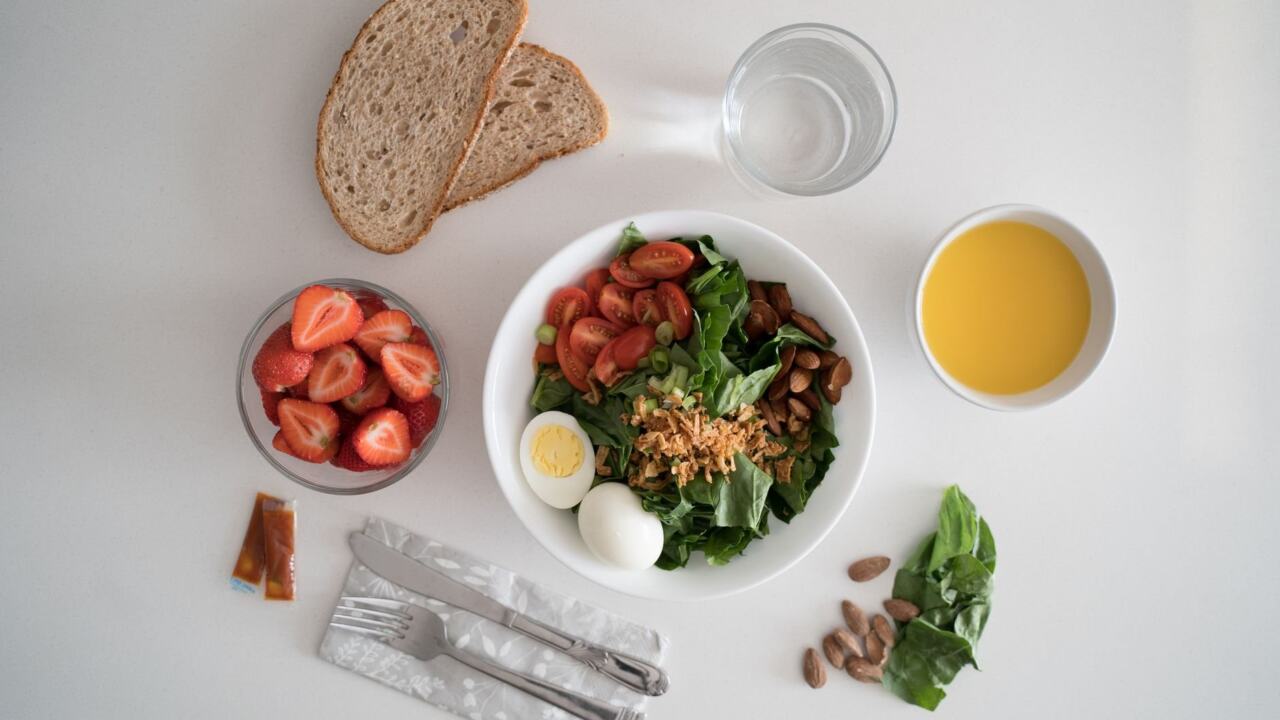
The healthy eating guidelines worth following start with your calorie level, then a flexible plate built from food groups, then limits on sugary drinks and salt. Decide first whether you need a daily target or a plate-building habit.
Readers who want a number first can open the guide on how many calories do i need per day. Readers who want a method can go straight to the plate section. The rest of this page shows where each decision leads and how to apply the same checks to packaged foods and supplements.
Choose your starting point
Most people arrive with one of five needs, and each has a different best first step. Match yours to the list below, then read that section before the others.
- You want a daily target. Use the USDA’s Daily Servings by Calorie Level document, which sits alongside the Dietary Guidelines. It offers 12 calorie levels for ages 2 and older, from 1,000 to 3,200 calories per day. Pick the level that fits your age and needs rather than the one that sounds ideal.
- You want a simple method with no counting. Build meals from the food groups on a plate graphic. This suits anyone who dislikes tracking and prefers a repeatable habit.
- You want to cut back on one nutrient. Go to the added sugar, sodium and fiber sections. They suit readers who already eat reasonably well but suspect one weak spot.
- You are comparing eating styles. The Mediterranean pattern and meal-timing approaches such as intermittent fasting each have their own sections below. Treat them as ways of applying the basics, not replacements for them.
- You are checking a product or a supplement. Skip to the label and supplement sections. The standard is the same one used for food guidance: who said it, how recent it is, and what amount it refers to.
How to judge any nutrition guideline
A guideline is only as useful as its source, its age and its scope. Four checks keep you from following advice that does not apply to you or that has been superseded.
- Check the issuing body. Government guidance carries more weight than a brand or a blogger. Nutrition.gov, run for the US government, promotes the 2020-2025 Dietary Guidelines for Americans from USDA and HHS. The USDA’s own dietary patterns page describes guidelines covering 2025-2030. When two editions are in circulation, use the newer one on the USDA site and treat the older as background.
- Check the date. Historic reports show how advice has been phrased, but they are not current targets. The 1991 Diet and Health report and the 1990 Dietary Guidelines it discusses are examples. They read as milestones in how advice developed, not as limits to copy today.
- Check the country. Advice from another country’s health department can still be a sound reference, but confirm that the figure suits your own region before treating it as a rule.
- Check whether the source expects to change. Harvard’s Healthy Eating Plate and pyramid summarize the best dietary information available today and are updated as new findings arrive. Good guidance is stated as the current best reading of the evidence, not as a permanent rule.
Applying these four checks to food, drinks and supplements alike is what keeps advice consistent. A claim on a bottle or a tub deserves the same questions as a claim in a headline.
Dietary Guidelines for Americans: the daily framework
The Dietary Guidelines for Americans are the US government’s main reference for what a healthy eating pattern looks like. They are issued jointly by USDA and HHS and revised in editions, which is why the guidance you meet online may name different years.
Which edition to use
Nutrition.gov still points readers to the 2020-2025 edition with the slogan to make every bite count. The USDA’s dietary patterns page dates the present edition to 2025-2030. For decisions, go to the USDA page, because that is where the daily servings document is maintained. The practical advice to eat a varied, plant-rich pattern has not required readers to relearn their habits between editions.
Calorie levels and daily servings
The most concrete daily targets in the guidelines come from the supplementary Daily Servings by Calorie Level document. According to the USDA, it covers 12 calorie levels for ages 2 and older, ranging from 1,000 to 3,200 calories per day. That range is the span of the table, not a recommended target. Your own level depends on your age, body and activity, and the guide on how many calories do i need per day explains how to arrive at a sensible starting row.
Once you have a level, the servings give you a food-group budget for the day. Use it as a planning tool rather than a rule to be met at every meal. A day that runs slightly short on vegetables can be balanced the next day, and the framework is designed with that flexibility in mind.
A flexible framework, not a rigid diet
The USDA describes its dietary pattern as a flexible framework that supports cultural traditions, personal preferences and different lifestyles. It also states that the pattern is aligned with the evidence and meets the nutrient needs established in the Dietary Reference Intakes for people at various life stages. The consequence for readers is that you do not have to give up familiar foods to follow it. You can keep your cuisine and adjust the proportions, the preparation and the drinks.
Building a healthy plate
A healthy plate is built from food groups rather than from single nutrients, with vegetables, fruit, whole grains and a protein food sharing the space and water as the usual drink. The plate answers the everyday question of what to put on it far faster than a table of servings does.
Harvard’s Nutrition Source offers the Healthy Eating Plate and the Healthy Eating Pyramid for this purpose. The pyramid also addresses exercise, weight, vitamin D, multivitamins and alcohol, so it works as a wider lifestyle picture, not only a list of foods. Take the proportions from the plate graphic itself, and use the USDA servings table when you want numbers for the whole day. Because Harvard states that these tools change as findings change, check the page occasionally instead of treating a printed copy as final.
Vegetables, fruit and whole grains
These plant foods are the main source of fiber, and the oldest federal advice on the subject is blunt. The 1991 report records the Surgeon General’s recommendation to increase consumption of whole grain foods and cereal products, vegetables (including dried beans and peas), and fruits. It gives no numeric target, which is a reason to read the dedicated page on how much fiber per day for a current figure.
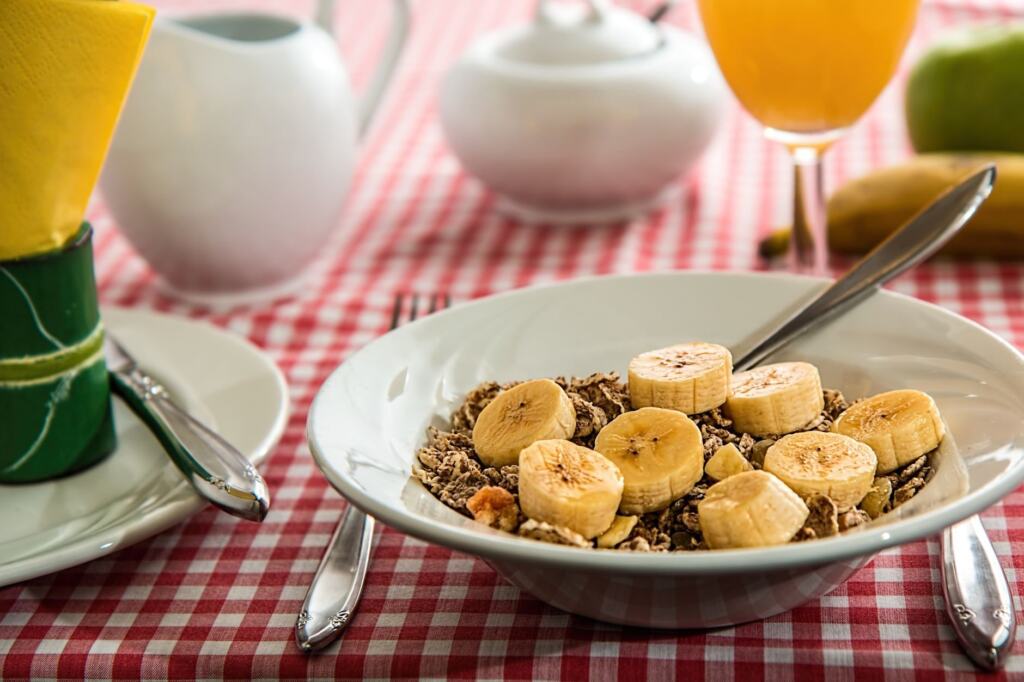
Two decisions follow from this. Choose whole fruit over juice when you can, since the Victorian health department notes that juice carries extra sugar and whole fruit keeps the fibre. And look past the word cereal on a box: a bowl like the one below can be a good base for fruit, but only the ingredient list tells you whether the grain is whole.
Protein foods and the Mediterranean pattern
The protein part of the plate can come from fish, beans, eggs or other foods, and the best choice depends on what you already eat and enjoy. Beans and peas count in two places, as vegetables in the federal advice quoted above and as a protein option, which makes them an easy swap for readers who want more plant foods.

If you like structured eating styles, the Mediterranean pattern is the one the US government site points to. Nutrition.gov links to a resource on the Mediterranean eating pattern, hosted by Penn State Extension. The step-by-step guide to mediterranean diet for beginners turns that into foods and a simple plan. It suits readers who want a recognizable template, whereas the plate suits readers who want to keep their current cooking.
Two further questions often come up at this point. If you wonder about the roles of protein, carbohydrate and fat in the meal, the guide on what are macronutrients covers them. And if eggs are on your plate, the research is summarized in do eggs raise cholesterol.
Added sugar and sodium
Added sugar and sodium are the two nutrients most often flagged for restraint, and the evidence available here supports a practical approach: cut the biggest sources first rather than chase a precise number.
How much added sugar is too much?
The oldest federal wording is the 1990 Dietary Guidelines advice to use sugars only in moderation, and it gives no numeric limit. A modern daily cap belongs to current guidance, so use the current guidelines and the guide on added sugar vs natural sugar if you want a figure. The decision that does not depend on a number is the drinks decision. The Victorian health department recommends that all Australians limit their intake of drinks containing added sugar. It explains why: sugary drinks add energy but no other essential nutrients. A sweet drink gives you the calories without the nutrients that a food would bring.
That makes sugary drinks the clearest place to start. Swapping them gives a larger change with less effort than hunting for small amounts of sugar in every packaged food. After that, use the label to compare similar products side by side, and treat whole fruit as a different case from sweetened drinks.
Sodium and salt
Salt and sodium are not the same measure, which trips up many readers. The 1991 Diet and Health report advised readers to limit total daily intake of salt (sodium chloride) to 6 g or less. That is a historic figure, and it is stated for salt, so it should not be compared directly with the sodium line on a label. For the current daily limit and practical ways to lower intake, use the guide on how much sodium per day.
One practical sodium check is drinks. Better Health Victoria suggests that anyone choosing bottled mineral water pick low-sodium varieties, with less than 30 mg sodium per 100 ml. If you drink mineral water regularly, that line on the bottle is worth a glance.
Water and other drinks
Water is the base of a sensible drinks habit, and the amount you need depends on the person. The Victorian health department states that women should have about 2 litres (8 cups) of fluids a day, and men about 2.6 litres (10 cups). Its adequate intake table gives 2.1 litres (about 8 cups) for women aged 19 and older and 2.6 litres (about 10 cups) for men aged 19 and older.
These figures are best read as a guide to the scale of daily fluid, not as targets to hit exactly. The same source notes that most mature adults lose about 2.5 to 3 litres of water per day, and that the body can get about 20% of its total water needs from food. That is why a high intake of soups, fruit and vegetables lowers the amount you need to drink. The adequate intakes include all fluids, but it is preferable that the majority of intake is from plain water. In practice, treat water as the default and other drinks as extras, with sweetened drinks limited as above.
For a fuller treatment, including who may need more or less, the guide on how much water should i drink a day goes through the figures in detail.
Reading labels and checking products
Guidelines only help if you can apply them in a shop. Labels and ingredient lists are the bridge, and the habit of checking them is what links this page to the rest of the site.
- Start with the label. Compare similar products on the same basis, and look at added sugar, sodium and fiber first, since those are the nutrients covered above. The walkthrough on how to read a nutrition label shows the order to read it in.
- Look at how much processing a food has had. The term ultra-processed food is used in research, and the evidence is explained in the guide to what are ultra processed foods. Use it to judge a product category, not to rank individual foods.
- Choose snacks the same way you choose meals. Look for fiber and protein in the ingredients and label, as described in the guide to healthy snack ideas.
- Check additives and ingredients case by case. If a specific ingredient worries you, the product-level guides are the next stop: Hidden Harm: 7 Food Additives To Avoid And Healthier Swaps For 2026 – Testpledge, Seed Oils To Avoid: A Practical Guide To Healthier Cooking Fats In 2026 – Testpledge and What American Foods Are Banned In Europe? 7 Controversial Ingredients And Products To Know In 2026 – Testpledge.
The rule to carry from these guides is to judge an ingredient by evidence, not by a scary list. A concern is worth acting on when an official or research source supports it and the amount in your diet is meaningful.
Supplements: the same standard
A supplement is a product, so it should pass the same tests as a food claim: a credible issuer, a recent date and a stated amount. Food comes first in the guidelines, and supplements are an addition for specific needs, not a substitute for the plate.
The oldest federal advice here is cautious. The 1991 Diet and Health report advised readers to avoid taking dietary supplements in excess of the RDA in any one day. Harvard’s pyramid, meanwhile, lists vitamin D and multivitamins among the lifestyle factors it addresses alongside food groups. Together these suggest a sensible order: sort out the food pattern first, then decide whether a particular supplement fills a gap, and keep any dose within the recommended daily amount for that nutrient. A label claiming far more than the recommended intake is a reason for caution, not a selling point.
Meal timing and diet trends
Meal timing is a separate question from what you eat. Approaches such as intermittent fasting change when you eat, not which foods the guidelines recommend. If you are tempted by one, test it against the same criteria used throughout this page: who is making the claim, what the evidence shows, and whether it fits your life. The summary of trials in does intermittent fasting work is the place to start. Even where a timing approach suits you, the plate, the drink choices and the label checks above still decide the quality of what you eat.
Quick reference
The table pulls together the figures on this page that you can act on immediately, with a note on how to use each.
| Topic | Figure and condition | Planning use |
|---|---|---|
| Calorie levels in the USDA servings document | 12 levels, 1,000 to 3,200 calories per day, ages 2 and older | Choose the row that fits your age and needs; the range is not a target. |
| Fluids for women aged 19 and older | 2.1 litres (about 8 cups) per day, all fluids | Use as a guide to scale, with most of it from plain water. |
| Fluids for men aged 19 and older | 2.6 litres (about 10 cups) per day, all fluids | Use as a guide to scale, with most of it from plain water. |
| Water from food | About 20% of total water needs | Soups, fruit and vegetables lower the amount you must drink. |
| Low-sodium bottled mineral water | Less than 30 mg sodium per 100 ml | Check the bottle label if you drink mineral water often. |
The calorie range comes from the USDA dietary patterns page, and the fluid and sodium figures come from Better Health Victoria.
Frequently asked questions
Which edition of the Dietary Guidelines should I follow?
Use the newest edition. Nutrition.gov still promotes the 2020-2025 edition, while the USDA describes guidelines covering 2025-2030, so the USDA page is the safer reference.
Is fruit juice as good as whole fruit?
No. Better Health Victoria points out that juice has extra sugar, and whole fruit keeps the fibre, so whole fruit is the better everyday choice.
Should I take a supplement above the RDA?
The 1991 Diet and Health report advised against supplements in excess of the RDA in any one day. Check the amount on the label against the recommended daily amount for that nutrient.
Why do some figures here come from an Australian health site?
Better Health Victoria publishes clear adequate intake values for fluids by age and sex. They work as a practical reference, but check them against guidance for your own region.