pfas pfoa and ptfe free cookware offers safer nonstick options for home cooks in 2026. This guide explains why those chemicals matter and gives practical, actionable guidance so you can choose, use, and maintain pans that really are free of PFAS, PFOA, and PTFE. It shows how to spot true PFAS/PFOA/PTFE-free cookware on labels and in the fine print, lists safe materials and trade-offs, and outlines simple routines to preserve nonstick performance and cookware lifespan. Read this guide to reduce chemical exposure in your kitchen while keeping reliable cooking results.
Key Takeaways
- PFAS, PFOA, and PTFE free cookware offers a safer nonstick option by eliminating harmful chemicals linked to health risks and overheating fumes.
- To ensure truly PFAS/PFOA/PTFE-free cookware, buyers should check labels for explicit claims, seek third-party certifications, and verify brand transparency through safety data and user reviews.
- Ceramic coatings, seasoned cast iron, and carbon steel provide effective nonstick alternatives without PFAS, PFOA, or PTFE, each requiring specific care to maintain performance.
- Stainless steel and hard-anodized aluminum pans are durable, PFAS/PFOA/PTFE-free options that perform well for high-heat cooking and long service life.
- Proper maintenance—such as using moderate heat, soft utensils, and hand washing—extends the life of PFAS/PFOA/PTFE-free cookware and preserves safe cooking conditions.
Why PFAS, PFOA, And PTFE Matter For Health And Kitchen Safety
PFAS (per- and polyfluoroalkyl substances), including legacy compounds such as PFOA, and polymer coatings like PTFE, are common in many traditional nonstick finishes. Concerns arise for two reasons: persistent contamination and thermal degradation. Some PFAS are persistent in the environment and accumulate in people over time when present in food-contact materials or released during manufacturing and disposal. PFOA has historically been linked to health concerns at higher exposures, which is why many regulators and manufacturers have moved away from it.
PTFE itself is stable at normal cooking temperatures but can degrade and release fumes if a pan is overheated (generally well above routine stovetop temperatures). These fumes are known to be harmful to pet birds and can trigger temporary flu-like symptoms in sensitive people. Choosing pfas pfoa and ptfe free cookware removes a common source of these concerns and reduces the likelihood of low-level chemical transfer to food in everyday use.
Beyond chemical safety, the shift to PFAS/PFOA/PTFE-free cookware affects kitchen behavior: cooks need to adapt heat management, utensil choice, and cleaning habits to protect coatings or seasoning. Understanding why these substances matter helps you weigh trade-offs—such as ease of use versus durability—and make informed choices for household health and kitchen performance.
How To Identify Truly PFAS/PFOA/PTFE-Free Cookware (Labels, Certifications, And Red Flags)
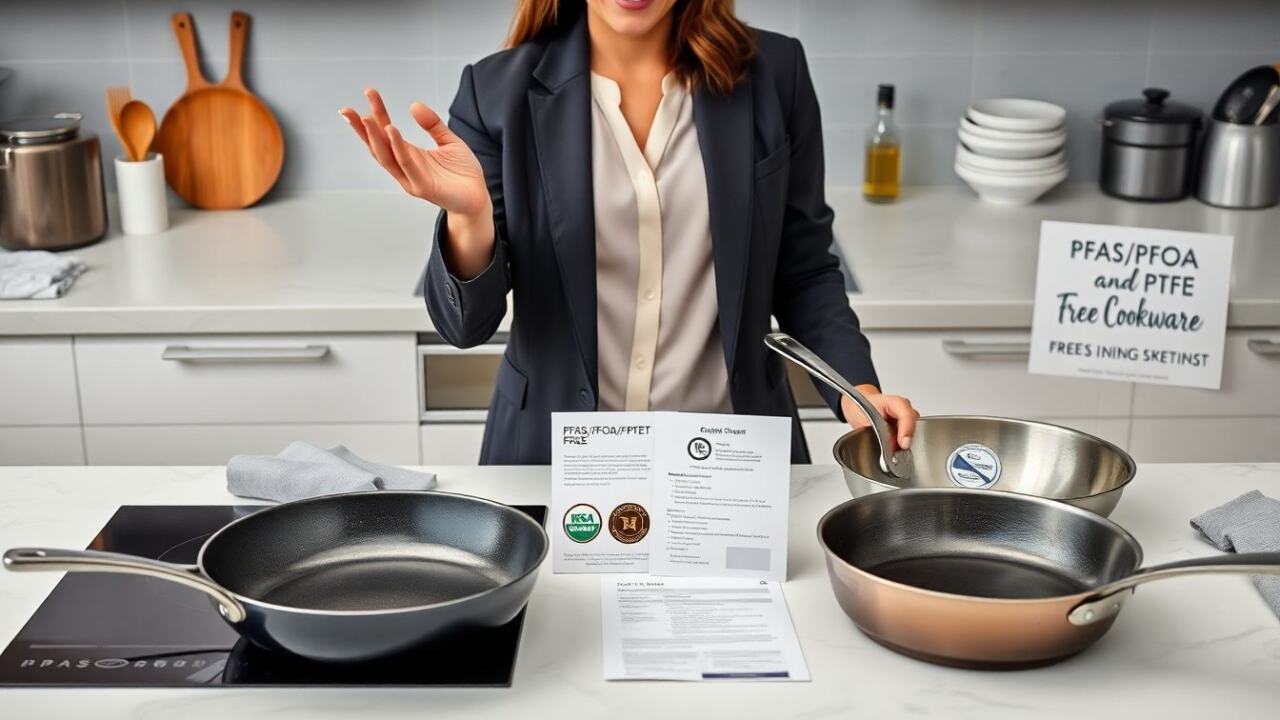
Labels can be helpful but sometimes misleading. When shopping, look for explicit statements such as “PFAS-free,” “PFOA-free,” and “PTFE-free” on the product page and packaging. If a listing only says “non-toxic” or “eco-friendly,” ask for more detail: which chemicals are excluded and how was that verified? Manufacturers that publish material safety data sheets (MSDS) or third-party test summaries are easier to verify.
Third-party certifications can increase confidence but understand what each covers. Certifications for indoor air quality or chemical content (for example, independent lab testing or recognized certification bodies) are more useful than generic eco badges. GREENGUARD or NSF-style certifications can indicate emissions or food-contact safety testing, but check the scope of the certificate. If a seller cites lab tests, request the test scope and date to confirm they cover the final coated product, not just the raw material.
Red flags to watch for: vague language without chemistry details, claims that focus only on one compound (e.g., “PFOA-free” while silent about other PFAS), missing care instructions, or seller evasiveness when asked for documentation. Read user reviews for consistent reports of flaking, persistent odor, or rapid loss of nonstick performance—these are practical indicators that a coating is failing and may expose underlying materials. When in doubt, prioritize retailers or brands that are transparent about testing methods and offer clear return policies.
Safe Cookware Materials And Nonstick Alternatives Overview
Several materials and coating approaches deliver nonstick performance without PFAS, PFOA, or PTFE. Each has strengths, limits, and specific care needs. The right choice depends on common meals you prepare, how much maintenance you’ll perform, and what cooking temperatures you use most often. Below is a practical comparison to help match materials to cooking habits.
When evaluating options, consider: typical stovetop and oven temperatures you use; whether you need easy-release for eggs and pancakes; whether you prefer low-maintenance or are willing to season and care for pans; and whether longevity and high-heat performance matter more than one-click convenience.
Ceramic-Based Coatings: Benefits, Limitations, And What To Look For
Ceramic coatings are inorganic, often silica-based layers applied to a metal substrate. They provide a slick, PTFE-free surface that performs best at low to medium heat. Key benefits: quick release for eggs and pancakes when used correctly, no PTFE fumes risk, and a generally cleaner marketing position for those seeking pfas pfoa and ptfe free cookware.
Practical limitations and buying notes: ceramic loses slickness faster with repeated high-heat use and abrasive cleaning. Look for pans with a robust bonded layer and a solid metal base (hard-anodized or thick-gauge aluminum) to reduce warping and improve heat distribution. Check product care instructions: many ceramic-lined manufacturers recommend gentle detergents, soft sponges, and avoiding metal utensils. If the listing mentions “reinforced” ceramic or multiple ceramic layers, prefer those constructions but verify durability through user reviews. To extend life, avoid preheating an empty pan to high heat, season new ceramic pans lightly with oil if recommended, and store them carefully to prevent chipping.
Seasoned Cast Iron And Carbon Steel: Nonstick Performance And Care
Seasoned cast iron and carbon steel are time-tested PFAS/PFOA/PTFE-free options that develop a natural nonstick patina through repeated oiling and heating. Advantages include exceptional heat tolerance, long service life, and often superior browning and searing performance. They are forgiving at high temperatures where some coatings would fail.
Care routine: build and maintain seasoning by applying a thin layer of oil and heating until polymerized; after cooking, rinse or wipe clean, dry thoroughly, and apply a light coat of oil to prevent rust. Avoid prolonged soaking or dishwasher use. If rust appears or seasoning is uneven, re-season by scrubbing, drying, and applying several oil-heating cycles. Note that acidic foods (tomato, wine, vinegar) can strip seasoning with prolonged exposure but will not introduce PFAS or PFOA; for long-simmered acidic dishes, consider using enameled cast iron or stainless steel.
Stainless Steel, Hard-Anodized Aluminum, And Other Durable Options
Stainless steel and hard-anodized aluminum are reliable, PFAS/PFOA/PTFE-free bases favored for high-heat cooking, deglazing, and durability. Stainless steel is excellent for techniques that require fond and deglazing (sauces), while hard-anodized aluminum offers even heating and resistance to wear. These metals are not naturally nonstick for delicate foods, so proper technique—preheating, adequate oil, and right-temperature control—is key.
Buying tips: prefer thicker gauge construction and multi-ply designs for heat stability. If a nonstick layer is bonded on top, confirm that the final coated product explicitly states it is PFAS/PFOA/PTFE-free. For cooks who want low maintenance and heavy-duty performance, pairing a stainless or hard-anodized set with one seasoned cast-iron or carbon-steel pan covers most tasks without relying on PTFE-based coatings.
Buying, Maintaining, And Using PFAS/PFOA/PTFE-Free Cookware For Best Results
Shopping checklist: start with a basic set that matches your most frequent tasks—one sauté pan, one skillet, and one saucepan—or buy individual pieces to test. Verify explicit PFAS/PFOA/PTFE-free claims, request test documentation if uncertain, and read both professional and user reviews for long-term durability notes. Consider retailers with liberal return policies so you can trial a pan and return it if it fails quickly.
Daily use and maintenance tips: preheat pans briefly before adding oil (but avoid overheating an empty coated pan), use wood or silicone utensils to prevent scratching, and hand wash when recommended. For ceramic pans, cook at low-to-medium heat and avoid thermal shock (don’t run a hot pan under cold water). For seasoned iron or steel, maintain seasoning with regular oiling and dry storage; for stainless or hard-anodized pans, use a little extra fat for delicate foods and deglaze to ease cleanup.
Troubleshooting and longevity: if a ceramic surface becomes noticeably less nonstick, try a gentle scrub and light re-seasoning with oil if the manufacturer recommends it; if chipping or flaking occurs, retire the pan. For rust on carbon steel or cast iron, scrub to bare metal and re-season. If oil smokes at normal cooking temperatures, reduce heat or switch to an oil with a higher smoke point. Storing pans with soft liners or hanging them prevents abrasion and preserves coatings. Many cooks transition gradually—keeping a favorite high-heat stainless or cast iron pan for searing while replacing delicate, older PTFE-coated pieces with PFAS/PFOA/PTFE-free alternatives for everyday use.