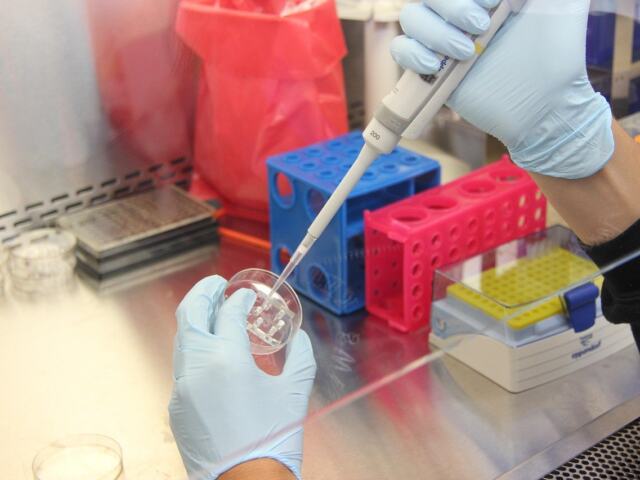
The term in vivo vs in vitro describes two main experimental approaches. Researchers use these approaches to study biology, develop therapies, and test interventions across basic, translational, and clinical research. In vivo tests use whole organisms—ranging from small model organisms to human volunteers—so they capture systemic responses that emerge from interactions among cells, tissues, organs, and environments. In vitro tests use isolated cells, tissues, or molecular systems in controlled laboratory settings, enabling precise manipulation of variables and rapid hypothesis testing. The choice between in vivo vs in vitro affects scientific relevance, cost, throughput, and ethical obligations. This guide explains meanings, common uses, practical considerations, and the strengths and limits of each approach so readers can compare them clearly and plan studies that balance scientific rigor with feasibility.
Key Takeaways
- In vivo experiments study whole organisms, providing integrated physiological data essential for safety and efficacy decisions.
- In vitro tests analyze isolated cells or molecules with precise control, ideal for high-throughput screening and mechanism studies.
- Researchers combine in vivo and in vitro methods to balance speed, cost, and relevance while reducing animal use.
- Ethical considerations prioritize reducing and replacing animal use, with in vitro methods aiding in meeting regulatory standards.
- Choosing between in vivo vs in vitro depends on study goals, budget, timeline, and the need for translational human relevance.
- Integrating human-relevant in vitro data with in vivo validation enhances predictive value for human biology.
What In Vivo Means And Typical Applications
In vivo experiments occur inside living organisms. Scientists administer candidate drugs, probes, or devices to animals or humans to measure whole-body responses that arise from complex physiological interactions. Typical readouts include pharmacokinetics (how a compound is absorbed, distributed, metabolized, and excreted), pharmacodynamics (the biological effect over time), immune responses, behavior, and long-term toxicity. Common in vivo models range from simple organisms like fruit flies or zebrafish—useful for genetic screens—to rodents for mechanistic and preclinical safety studies, and ultimately to controlled human clinical trials for efficacy and safety confirmation.
Researchers prefer in vivo when integrated data are essential: for vaccine development to assess protective immunity, for oncology to evaluate tumor–host interactions, or for neurology to monitor behavior and cognition after an intervention. In vivo work also reveals unexpected systemic effects (drug–drug interactions, off-target toxicity) that are hard to predict from isolated systems alone. However, careful experimental design, appropriate controls, and consideration of species differences are necessary when extrapolating in vivo findings to humans.
What In Vitro Means And Typical Applications
In vitro experiments occur outside living organisms in artificial environments such as cultured cell monolayers, 3D organoids, tissue slices, or biochemical assays. Scientists isolate cells, tissues, proteins, or nucleic acids and study them under tightly controlled conditions to probe molecular mechanisms, measure binding affinities, or quantify pathway activity. Examples include enzyme assays to test inhibition, high-content cell imaging to assess phenotypic changes, and organ-on-a-chip systems that model aspects of organ function.
Researchers favor in vitro approaches when they need precise control over variables, high reproducibility, or the ability to run many conditions in parallel. In vitro assays are widely used for target validation, early toxicity screening, lead optimization in drug discovery, and mechanistic studies that dissect signaling pathways. Advances in human-derived cell models and microphysiological systems have increased the human relevance of in vitro work, but researchers must still interpret results in the context of what is missing—immune interactions, circulatory dynamics, and whole-organism feedback.
Direct Comparisons: Advantages And Limitations Of Each Approach
In vivo gives integrated, organism-level data while in vitro gives controlled, mechanistic data. Each approach has distinct advantages and limitations that influence study design and interpretation. In vivo advantages include the capacity to observe emergent properties such as systemic metabolism, biodistribution, complex immune responses, and behavior, making these studies critical for assessing safety and efficacy before clinical testing. In vivo limitations include higher cost, longer timelines, greater variability, and ethical constraints associated with animal and human research. Species differences can also complicate translation from animal models to human biology.
In vitro advantages include speed, lower cost per condition, scalability for screening large compound libraries, and the ability to manipulate single variables precisely. These systems support mechanistic insights and are central to hypothesis generation and optimization. In vitro limitations stem from reduced complexity: many systems lack the multicellular interactions, mechanical forces, and metabolic context of whole organisms, which can reduce predictive value for certain endpoints. The phrase in vivo vs in vitro highlights how these complementary strengths and weaknesses guide method selection, with many studies deliberately combining both to maximize insight while managing cost and ethical impact.
How In Vivo And In Vitro Complement Each Other In Research
Researchers often combine in vivo and in vitro methods to create efficient, ethical, and informative research pipelines. A common strategy is to use in vitro assays for initial high-throughput screens and mechanistic exploration, narrowing candidate lists based on potency, selectivity, and basic toxicity. Promising candidates then move into targeted in vivo studies to confirm efficacy, assess pharmacokinetics, and evaluate safety in a physiological context.
This staged approach reduces the number of animals used, shortens timelines by filtering out poor candidates early, and strengthens mechanistic claims by validating molecular findings in whole organisms. It also supports regulatory packages by providing both mechanistic depth (in vitro) and organism-level evidence (in vivo). New workflows increasingly integrate human-cell-based in vitro models to improve human relevance before in vivo verification, creating hybrid pathways that leverage the best aspects of in vivo vs in vitro research.
Ethical And Regulatory Considerations When Choosing A Model
Ethical review boards evaluate in vivo studies for potential harm, scientific merit, and benefit to human or animal welfare. Regulators expect robust justification for animal use and adherence to humane care standards. The 3Rs framework—reduce, refine, replace—guides study planning: reducing animal numbers through better experimental design, refining methods to minimize suffering, and replacing animals with validated in vitro or computational alternatives where possible.
In vitro methods play a growing role in meeting ethical and regulatory expectations. Validated cell-based assays can replace some animal tests, accelerating approvals and reducing costs. Regulatory guidance increasingly accepts well-characterized in vitro data as part of safety assessments, provided limitations are acknowledged and complementary in vivo or clinical data address systemic endpoints when necessary. Clear documentation of rationale, methods, and welfare considerations helps secure ethical approval and regulatory acceptance for chosen study designs.
Translational Relevance And Predictive Value For Human Biology
Translational relevance measures how well a model predicts human outcomes. In vivo models can mimic human disease phenotypes, pharmacology, and metabolism better than simple in vitro systems in many cases, but species-specific differences in pathways, immune systems, and drug metabolism can limit direct translation. In vitro human cell models, including induced pluripotent stem cell (iPSC)-derived tissues and organoids, offer human-specific insights into cellular responses and genetic variability, yet they typically lack whole-body interactions.
Combining human-relevant in vitro data with targeted in vivo validation improves the ability to predict clinical outcomes. For example, human cell assays can reveal off-target effects or mechanism-based toxicity, which researchers can then monitor in vivo for systemic consequences. A balanced evaluation of in vivo vs in vitro evidence—considering biological question, endpoint, and context—leads to more reliable risk assessment and decision making for clinical translation.
Cost, Time, And Practicality: When To Use Which Method
In vitro tests usually cost less and finish faster than in vivo tests, making them ideal for early-stage discovery and iterative hypothesis testing. Labs can run hundreds to thousands of in vitro assays in parallel, generate dose–response curves quickly, and optimize leads with relatively modest infrastructure. By contrast, in vivo studies often require specialized housing, veterinary oversight, and longer observation periods, increasing both direct and indirect costs.
Teams typically use in vitro methods for lead identification, mechanism-of-action studies, and preliminary toxicity screens, then select the most promising candidates for in vivo evaluation of efficacy, dosing, and long-term safety. Practical planning should account for regulatory requirements, available expertise, timelines, and budgets. Choosing the right mix of in vivo vs in vitro steps—sometimes augmented by computational models—reduces wasted effort and accelerates progress from discovery to clinical testing.