| Decision | Bone broth | Collagen peptides | Planning use |
|---|---|---|---|
| Form | Liquid made by simmering animal bones and connective tissue for hours | Hydrolyzed collagen, broken into smaller pieces | Choose a sip-or-spoon food or a stir-in powder, depending on how you eat and drink. |
| Collagen per serving | Present, but varies widely by brand, batch, recipe and serving size | Collagen protein is the product itself | Compare the serving size and protein figures printed on each label before comparing prices. |
| Protein quality | Collagen is not a complete protein | Collagen is not a complete protein | Treat either as an add-on to other protein foods, not a replacement. |
| Amino acids | Collagen supplies glycine, proline and hydroxyproline | Collagen supplies glycine, proline and hydroxyproline | The amino acid profile does not separate the two products. |
| Sodium | Can be high, depending on the product | Check the label as with any product | Read the broth label first if you are watching sodium. |
| Using both | Reasonable to pair | Reasonable to pair | Skip doubling up only if cost, complexity or protein load is a concern. |
The table summarises a comparison of collagen peptides and bone broth and an overview of collagen, gelatin and bone broth.
Bone broth vs collagen peptides is a choice between food and supplement: broth is a variable, whole-food collagen source, while peptides are hydrolyzed collagen that dissolves in hot or cold drinks. Collagen itself is not a complete protein.
If you are weighing either product against other options on the shelf, start with how to choose a safe supplement, then use the sections below to settle the broth-or-powder question.
Is one better, or does the goal decide?
Bone broth is not simply a weaker version of collagen peptides, and peptides are not simply a purified version of broth. The two answer different practical needs, and the argument over which is better has not fully resolved. Because of that, a confident ranking would claim more than the evidence supports. A better approach is to match the product to the way you will actually use it.
The choice mostly comes down to what you want from a serving, how much you want to know about it, and how much routine you are willing to manage.
- Choose bone broth if you want food. It is a liquid you can sip or cook with, made from animal bones and connective tissue. It suits people who would rather get collagen as part of a meal than measure a powder.
- Choose collagen peptides if you want a defined add-in. The product is hydrolyzed collagen, and it is designed for simple, consistent daily use. It suits people who want to stir something into a drink they already have.
- Choose broth cautiously if sodium matters to you. Bone broth can be high in sodium, and the level varies by product. Read that line on the label before it becomes a daily habit.
- Lean on the label, not the brand name. For both products, the printed serving size and protein figure tell you more than the marketing does.
Collagen and protein per serving
Bone broth can be a source of collagen, according to this overview, but the amount is not fixed. The collagen content varies widely by brand, batch, recipe and serving size. That variability has a practical consequence. Two cartons labelled bone broth, or two cups from the same pot on different days, are not interchangeable.
If you want to know how much collagen you are getting from broth, the only reliable figures are the ones printed on a specific product’s label. A homemade pot has no label, so its collagen content is simply unknown from one batch to the next. A person who needs a predictable intake from a food-based source will find that hard to plan around.
Collagen peptides sidestep part of this problem because the product is collagen protein in a broken-down form. Their label still matters, since serving size differs between products. Check the stated serving and protein per serving, and compare on that basis rather than on tub size.
Protein quality is the second limit. Collagen is not a complete protein, so neither product can stand in for varied protein foods. Think of both as supplements to a diet, not as its foundation. Someone hoping that a cup of broth or a scoop of powder replaces a meal’s protein will be disappointed.
How each is made, and why it matters
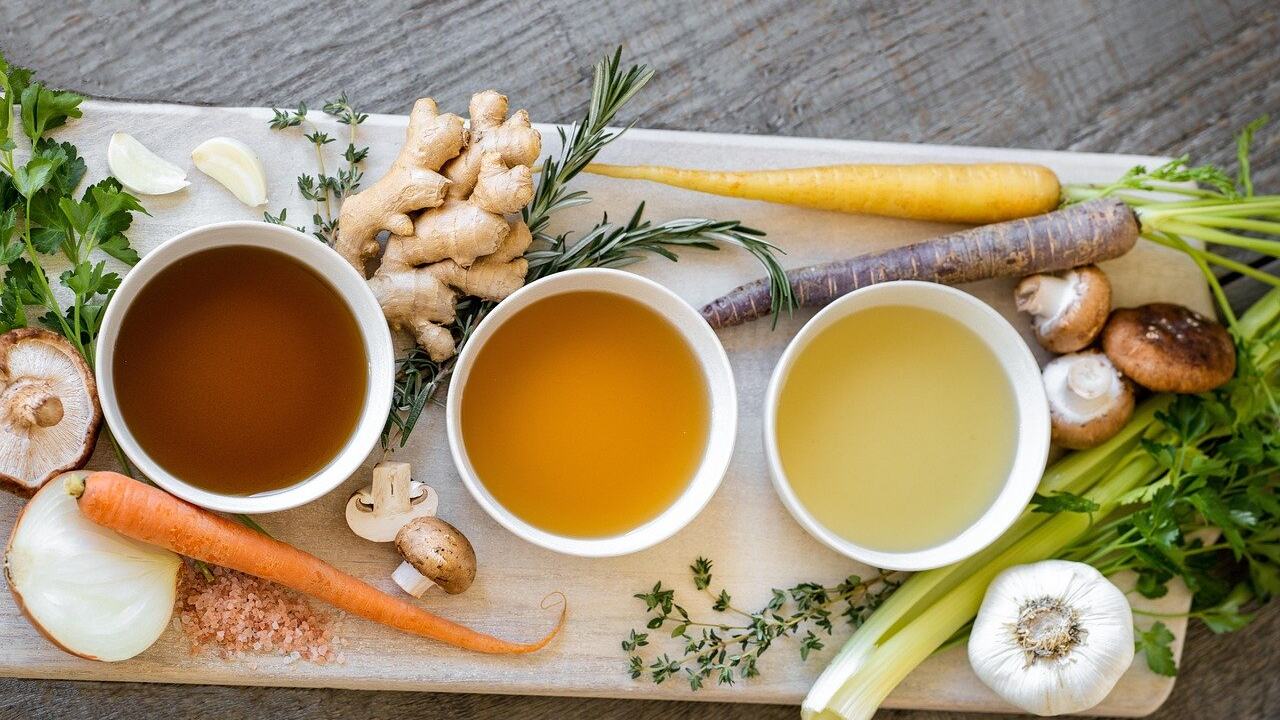
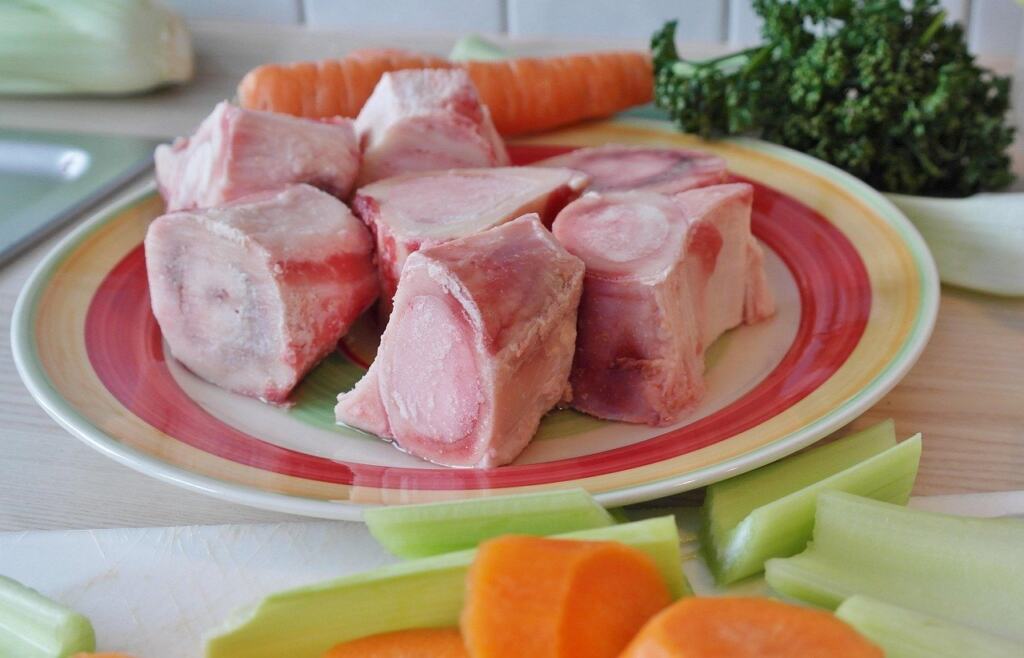
The difference in processing explains most of the difference in how the two behave in practice. Bone broth is made by simmering animal bones and connective tissues for hours. Everything that ends up in the cup depends on the bones used, the recipe and the time. That is why the output is so variable, and it is also why broth reads as a food: it carries whatever the cooking pulls out of the ingredients.
Collagen peptides are made differently. The collagen protein is hydrolyzed, meaning it is broken into smaller pieces. The same source says that is why they dissolve easily in hot or cold drinks. In practice, that makes the powder easy to add to coffee, tea, a smoothie or a cold glass of water without changing how you prepare anything else.
Both routes start with collagen, which is why the amino acid story is shared rather than competing. The consequence is that you are not choosing between a rich nutrient source and an empty one. You are choosing between an unpredictable food and a more controlled ingredient, and either may fit depending on how much you value convenience over consistency.
Using both
Using both is a legitimate approach. Some practitioners recommend it, with bone broth for daily nourishment and collagen for targeted support. The reasoning is a division of jobs: broth as part of eating, peptides as a measured top-up.
The same comparison of the two products gives the practical limit. The only reason to avoid doubling up is if it adds cost, complexity, or more protein than you want. That is a useful test for your own situation. If both items are already in your kitchen and you will use them without effort, there is no strong reason to drop one. If a second product means another purchase, another step in your morning and extra protein you did not ask for, pick the one you will keep using.
Because the evidence does not settle which is better, a simple trial is more sensible than a large commitment. Start with the product that best fits your routine and your sodium and protein limits. Add the second only if you have a clear reason. Keep a note of why you added it, so you can judge later whether it was worth the effort.
Supplement decisions often run into the same question of form versus function. If you are also weighing other forms of supplement, see Magnesium Glycinate Vs Citrate Vs Oxide: Which Form Is Best For You In 2026? – Testpledge. If you wonder whether chewable formats are worth it, read Are Gummy Vitamins Effective? What Science Says About Benefits And Drawbacks (2026 Guide) – Testpledge.
Frequently asked questions
Where are the different types of collagen found?
Type II collagen is found mostly in cartilage. Type I is found in skin, tendons, blood vessels, organs and bone, according to an overview of collagen, gelatin and bone broth.
Is collagen a complete protein?
No. Collagen does not supply all essential amino acids in needed amounts, so it works best alongside other protein foods rather than replacing them.
Which amino acids does collagen supply?
Collagen supplies amino acids such as glycine, proline and hydroxyproline. No per-serving amounts are given for these, so rely on the label of the product you buy.